Register
Covered producers, manufacturers, importers, sellers, and specified practitioners generally registered and paid annual occupational taxes.
THE STORY BEHIND THE MARK
Tribute ’37 takes its name from a pivotal year in federal cannabis history—not to celebrate the law, but to remember the complicated system it created and everything that followed.
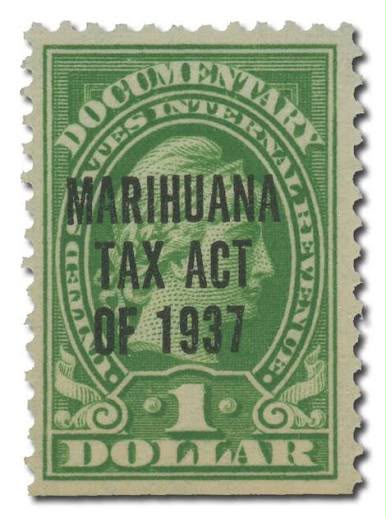
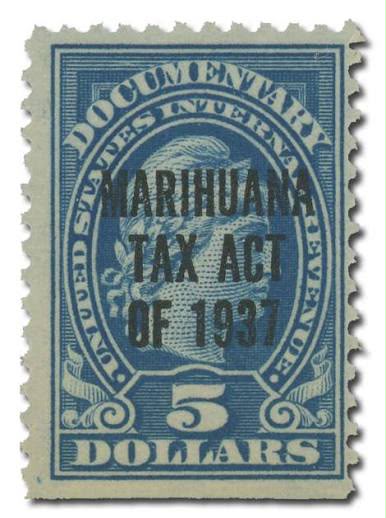
Open the first chapterHistorical stamp imagery presented for educational context
THE STAMP
Approved August 2, 1937 and effective October 1, the Marihuana Tax Act brought cannabis under a federal system of registration, occupational and transfer taxes, Treasury order forms, recordkeeping, and criminal penalties for noncompliance.
It was not the later Controlled Substances Act. Its machinery worked through taxation and administration, with specific exemptions and defined exclusions.
“Marihuana” is retained here only because it is the spelling in the statute’s official title.
Read the original Act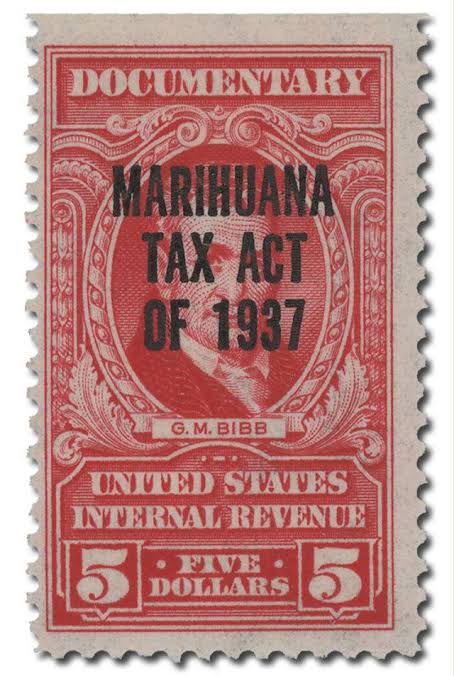
THE PRICE OF PERMISSION
Transfer to a registered special taxpayer
Transfer to an unregistered transferee
The transferee paid when obtaining the required order form, and Treasury-provided stamps were affixed to the original. The contrast is historically memorable, but it must be read in its statutory context—not as a modern price, permit, or legal rule.
Source: Marihuana Tax Act of 1937, §§6–7.
ADMINISTRATION AS CONTROL
Covered producers, manufacturers, importers, sellers, and specified practitioners generally registered and paid annual occupational taxes.
Transfers generally moved through written Treasury order forms, retained records, and inspection access for designated officials.
A stamp on the original form represented tax paid. Today, that visual language informs Tribute ’37—it does not certify the product.
Tribute ’37 is not affiliated with, issued by, certified by, or endorsed by the United States government.
LEARY v. UNITED STATES
In 1969, the Supreme Court held that the privilege against self-incrimination was a complete defense to the transfer-tax charge at issue. Compliance would have exposed an unregistered transferee to a real and appreciable risk of prosecution.
The precise history matters: Leary undercut a key enforcement mechanism; it did not announce that every provision of the Act was invalid.
Read the Supreme Court opinionA NEW FEDERAL ERA
Congress enacted the Controlled Substances Act and legislation repealing the former federal marihuana tax chapter.
The repeal generally took effect, leaving the new five-schedule federal framework to define the next era.

FROM THEN TO NOW
Tribute ’37 turns a marker in a difficult American history into a reason to look closer: at the journey, at the documentation, and at what responsible modern transparency should mean.
The historical Act does not determine the legality of a modern hemp-derived THC beverage. Current federal, Texas, and destination-state rules are separate—and changing.
Meet the collectionTHE POINT OF VIEW
1937 marks a turning point in America’s complicated cannabis history. Tribute ’37 remembers that history, respects the distance traveled, and brings the story forward through a distinctly modern Texas beverage.
HISTORY · TEXAS · TRANSPARENCY · RESPONSIBLE ENJOYMENT
THE ARCHIVE
Historical copy is based on authoritative original sources. Modern hemp-derived THC regulation is separate from the 1937 Act and may change by jurisdiction.